www.antik.it/Antique-barometers/8158-Aneroid-Barometer/
Code 8158
EUR 350.00
In stock
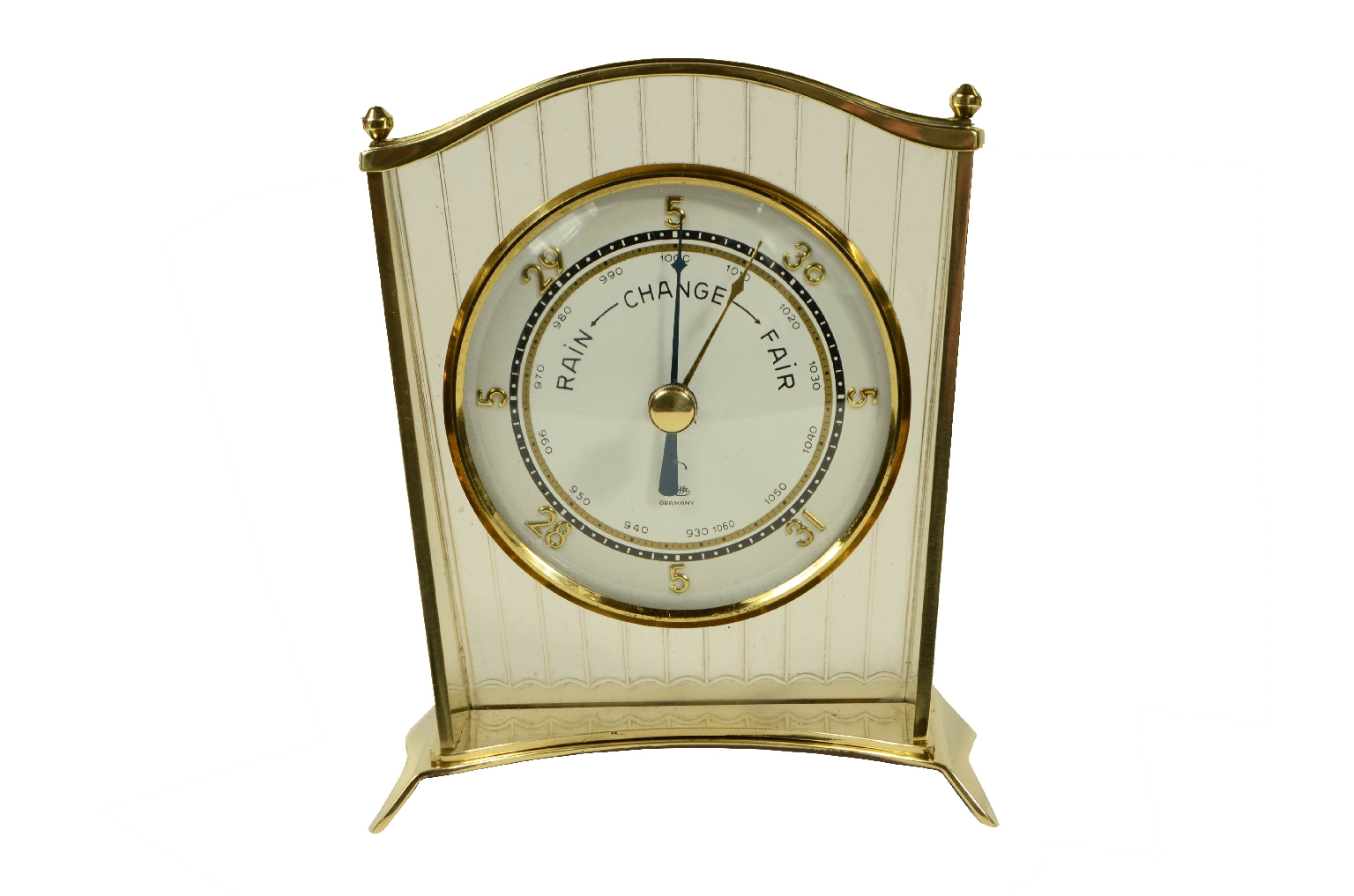
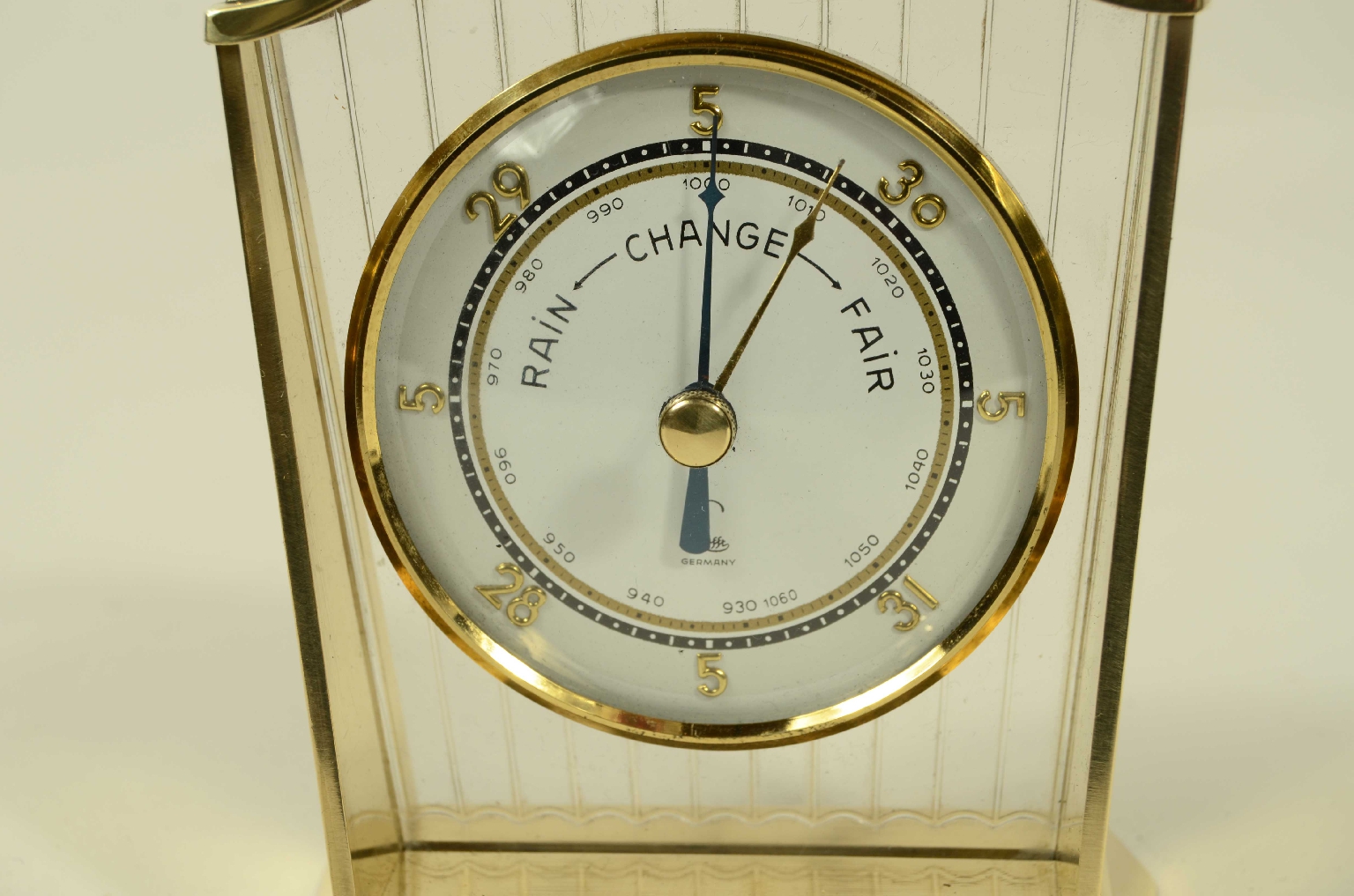
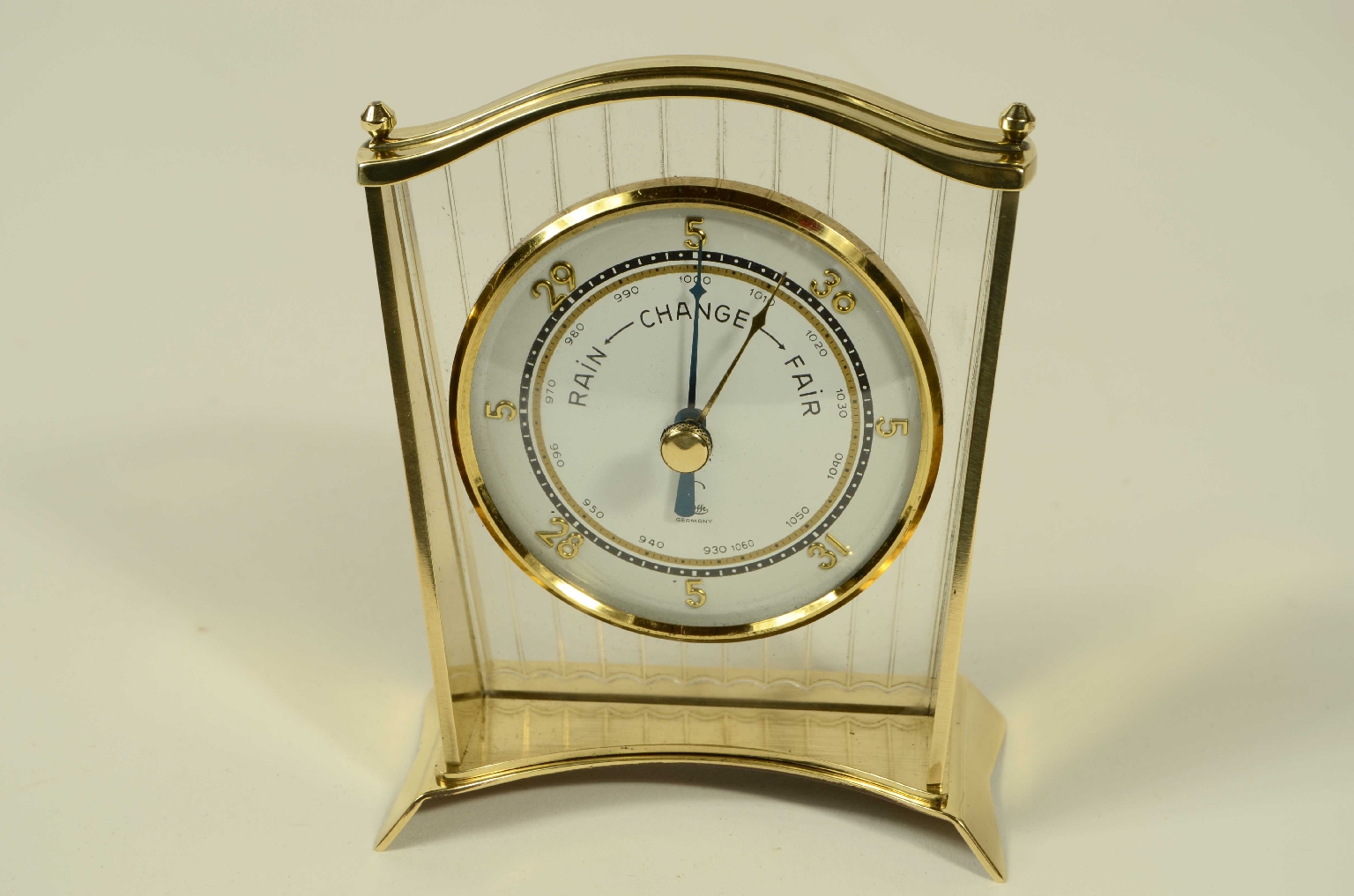
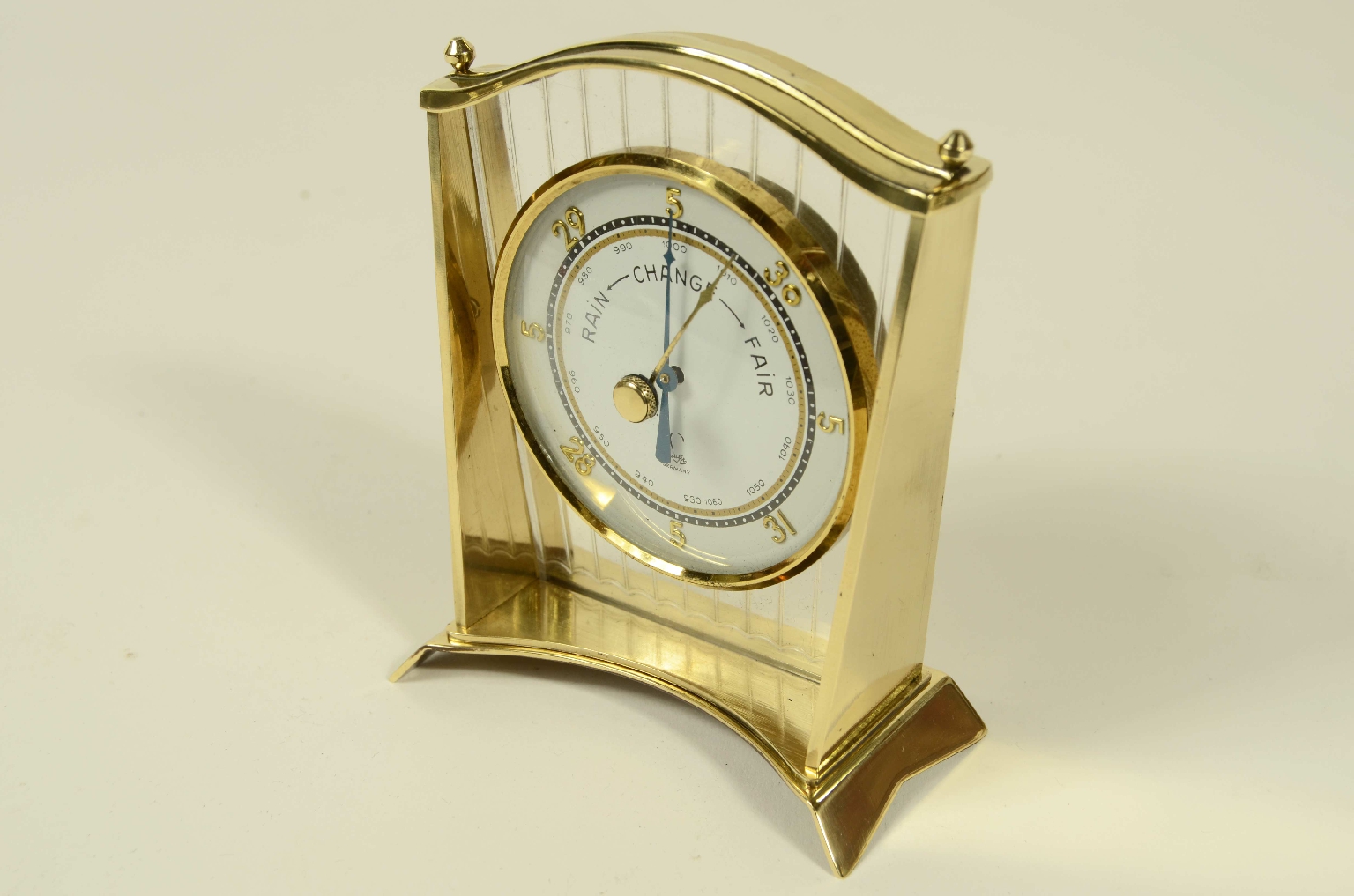
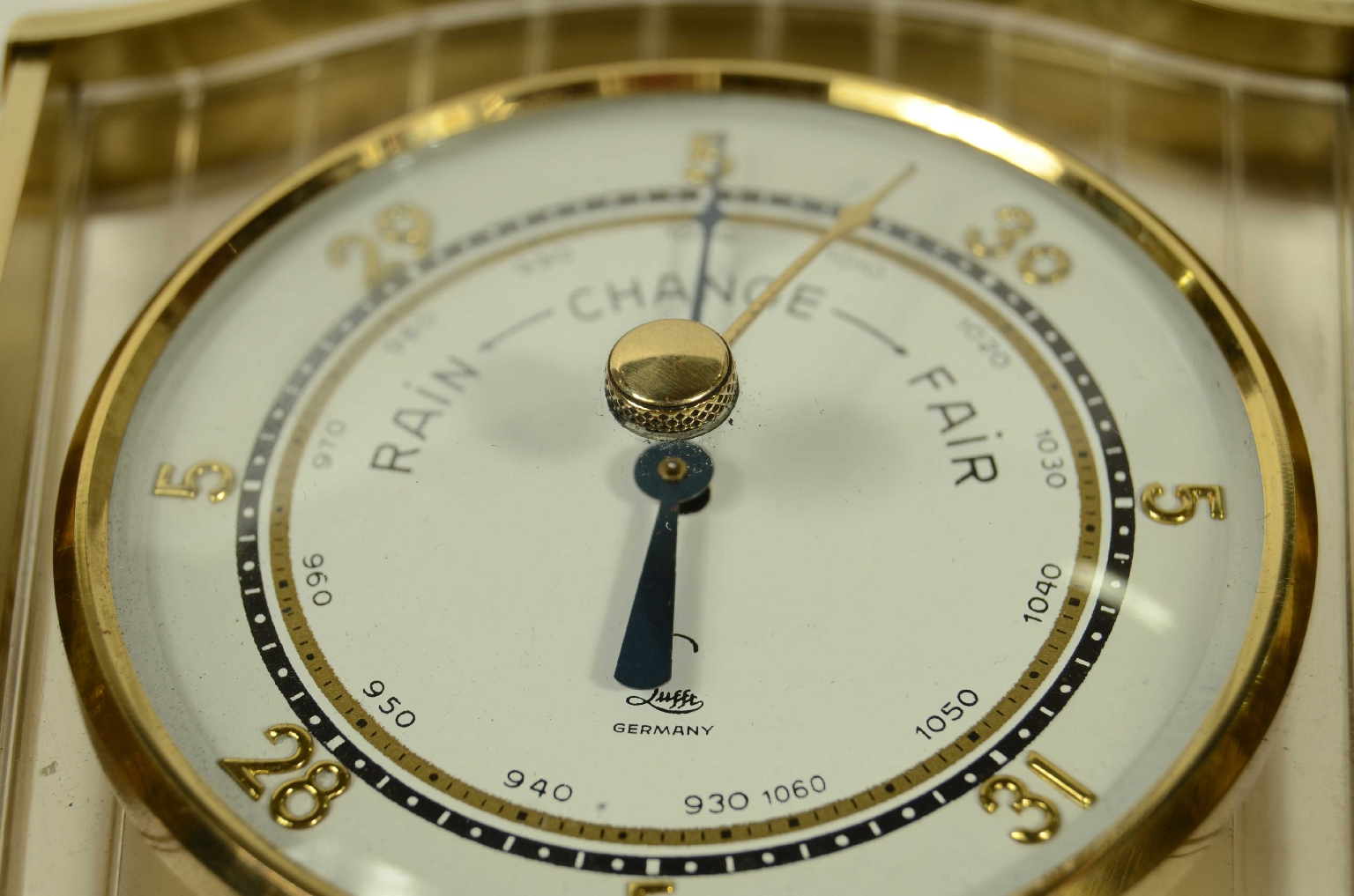
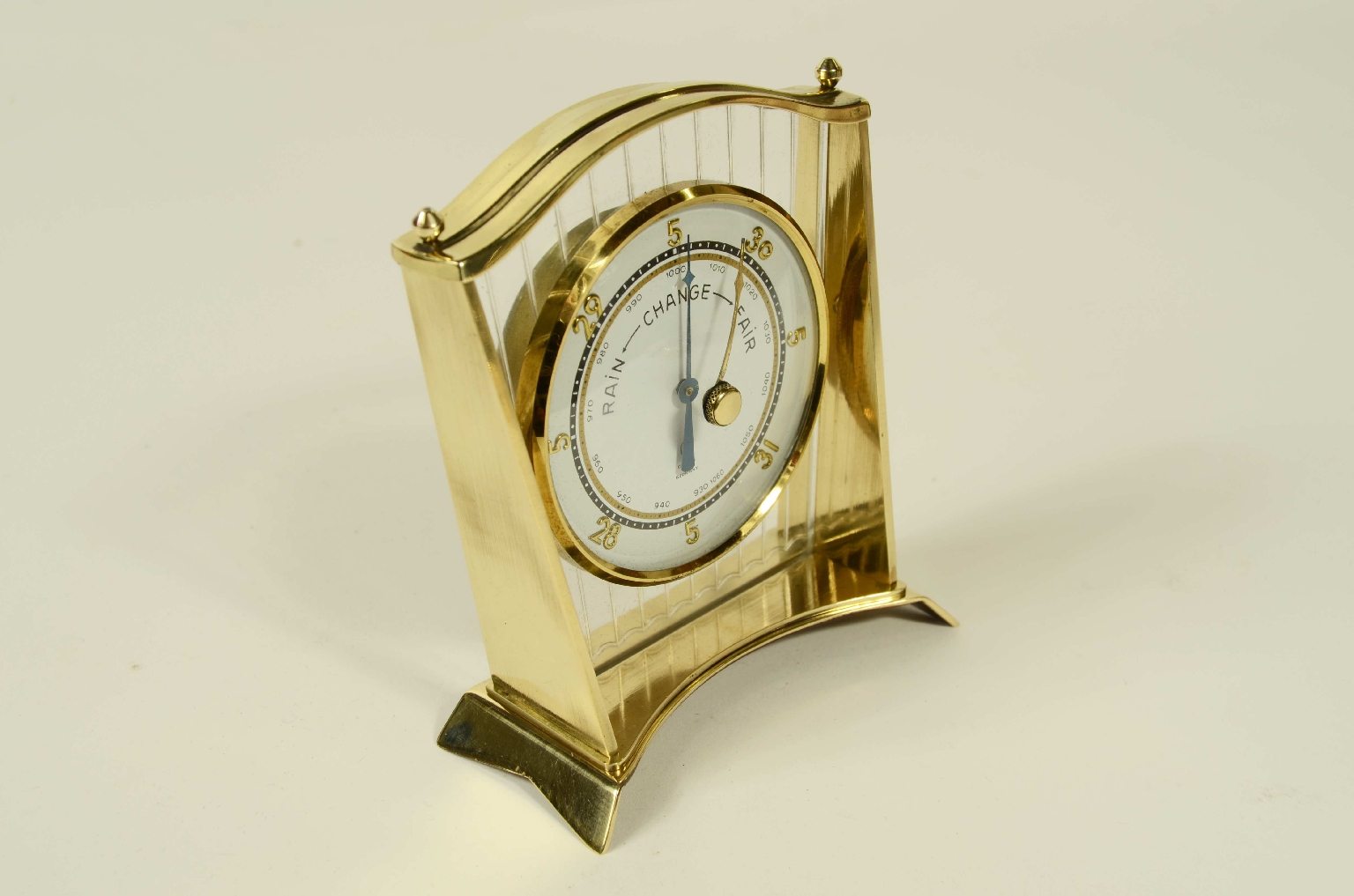
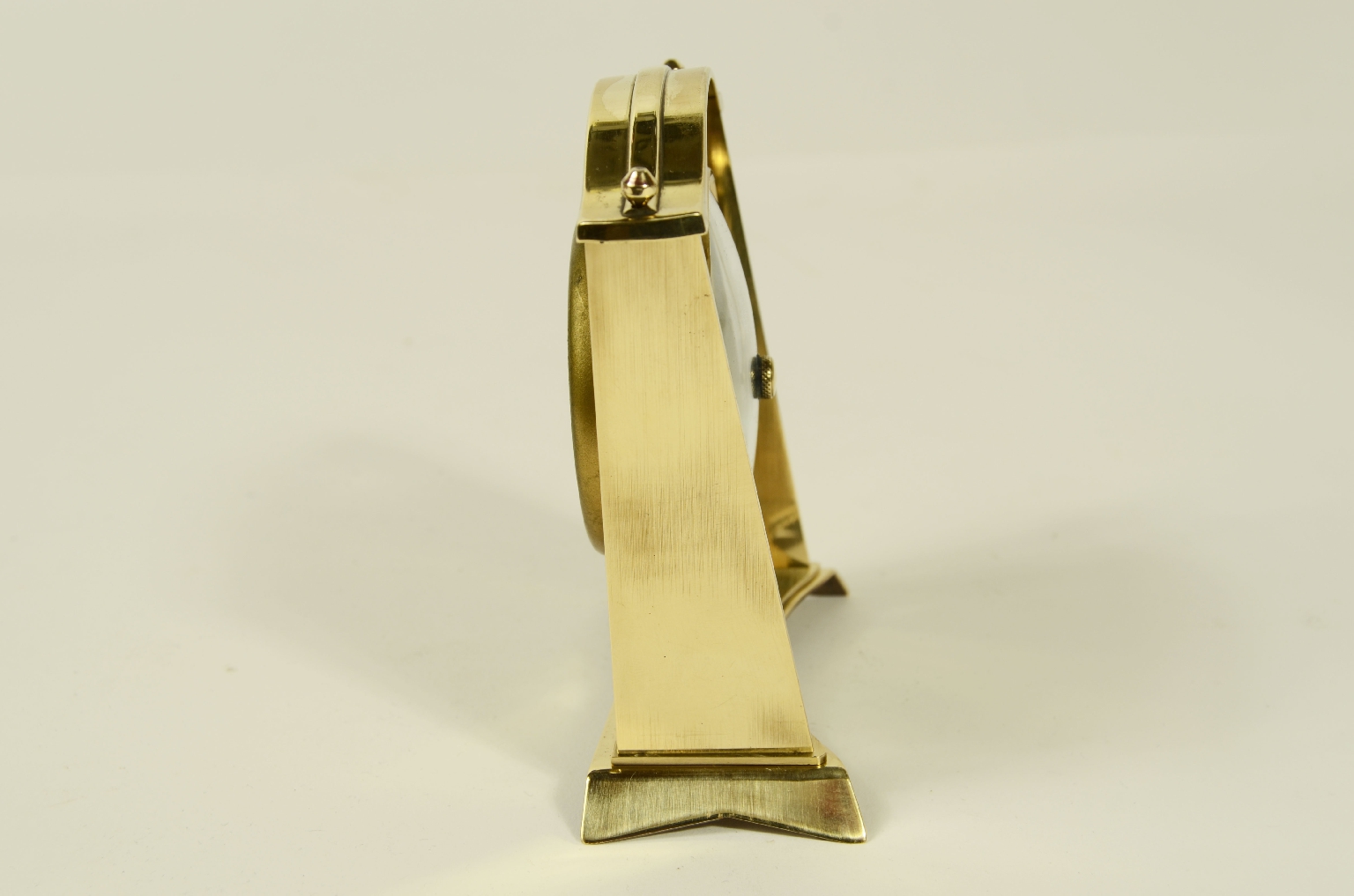
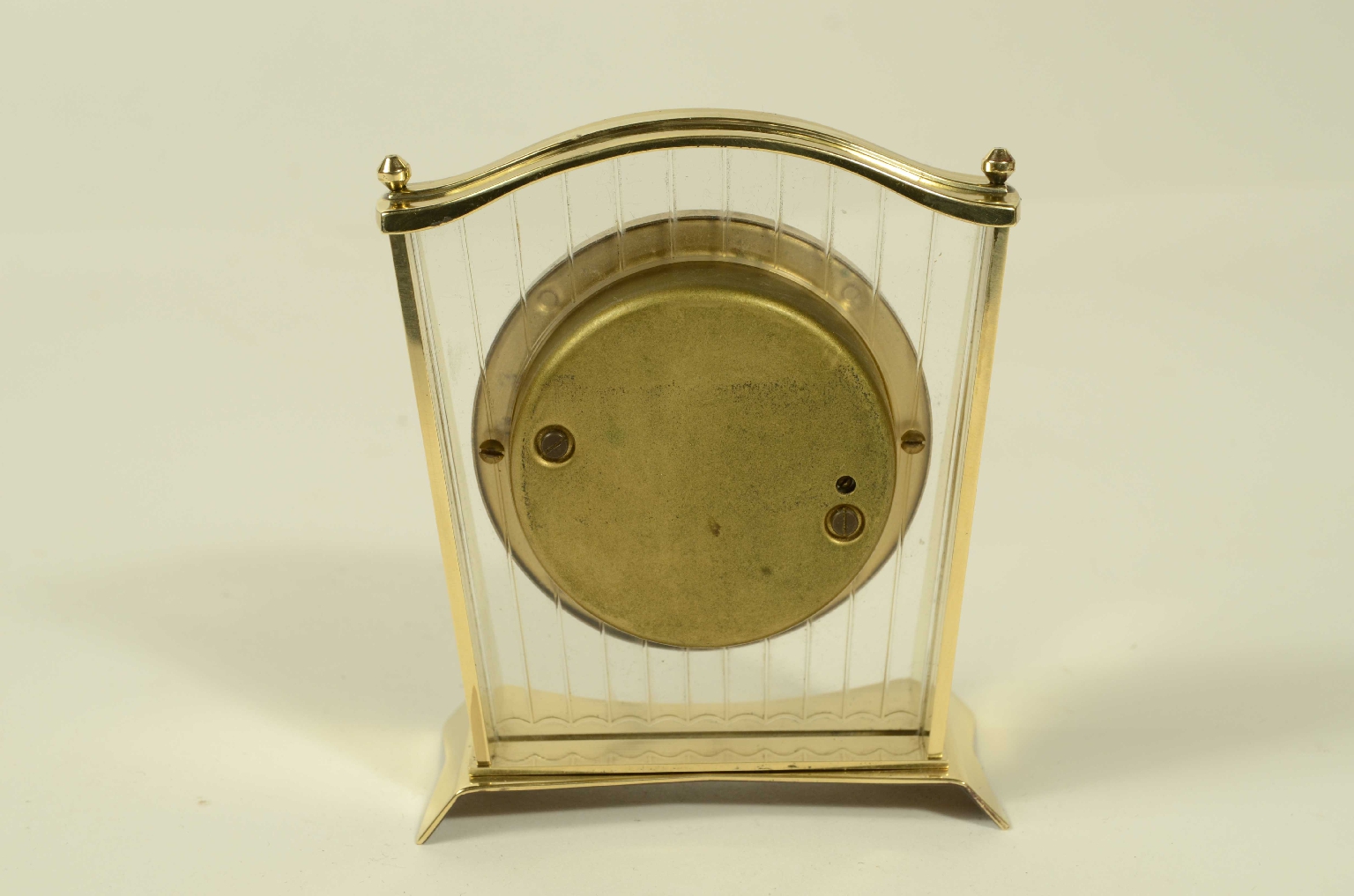
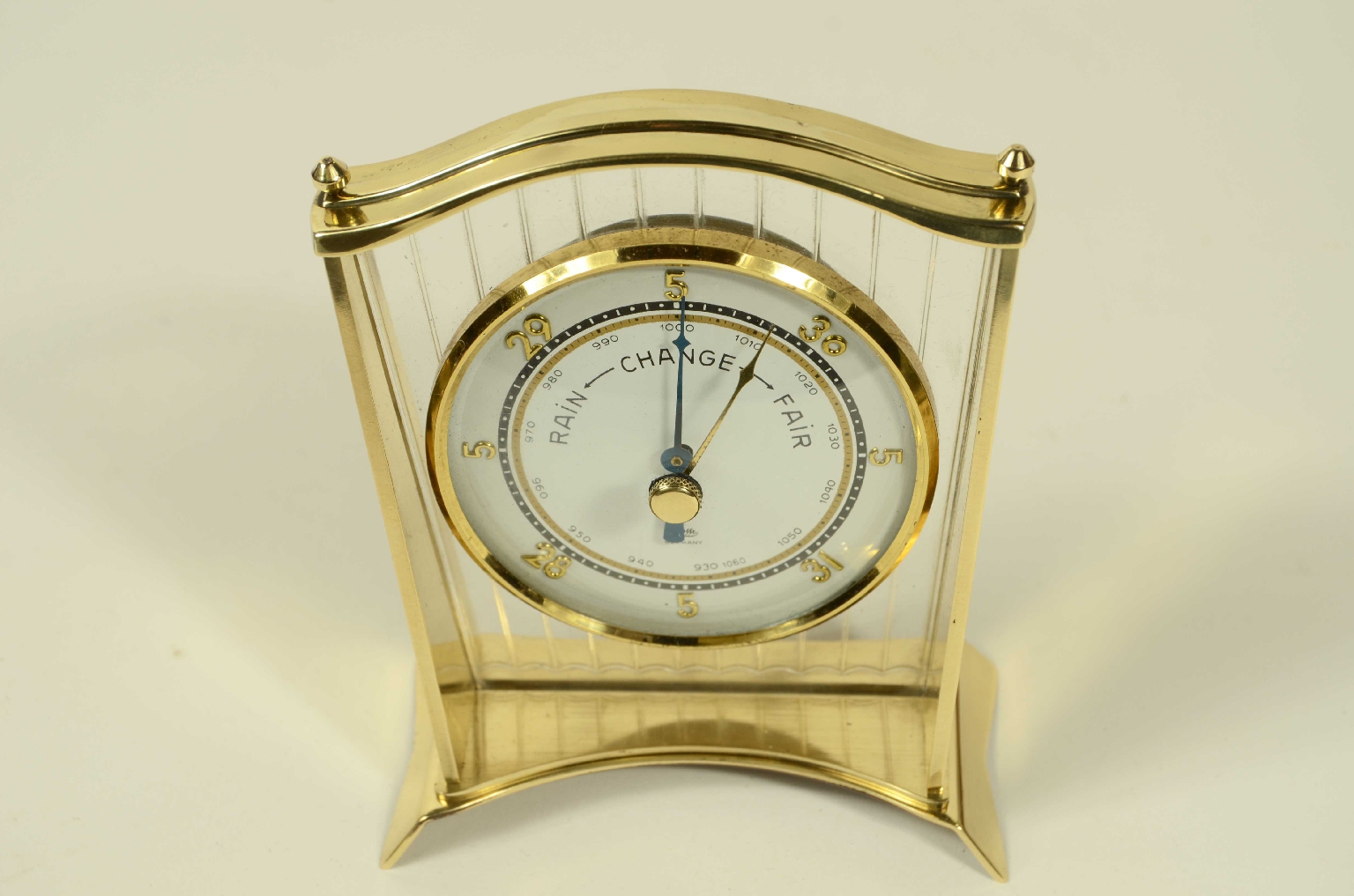
1776259508Code 8158 Aneroid BarometerBrass and glass aneroid barometer by Lufft for the English market in the 1950s.
Good condition, fully functional.
Dimensions: 9 x 4.5 x 11 cm – 3.6 x 1.8 x 4.2 in.
It is a measuring instrument whose pressure-sensing organ is a metal box called a barometric capsule. The capsule contracts or expands as a result of changes in pressure, and its movements are transmitted to an indicator hand via a mechanical system. The development of this type of barometer is due to Bourdon, a French inventor and industrialist (Paris 1808-1884), who had founded a factory for the construction of steam engines in Paris in 1835; in 1849 he invented the metal manometer, to which he attached his name, and in 1853 a type of aneroid barometer.
Since ancient times, humans, as farmers and navigators, have observed and attempted to predict climate change. The scientific study of atmospheric changes began in the mid-17th century, in connection with experiments aimed at demonstrating the existence of a vacuum, which ancient philosophers denied because "nature abhors a vacuum!" Evangelista Torricelli (1608-1647), a mathematician and physicist and disciple of Galileo, was the first, in 1643, to build an instrument capable of detecting changes in air pressure, which he understood to be linked to changes in the weather.
Gotthilf Lufft (1848-1921), a technical assistant at the Stuttgart Polytechnic, began his career in 1873 at the age of 25, taking over an optical company and immediately starting to produce aneroid capsules in his workshop, which until then had been imported from France. A dynamic entrepreneur, Lufft successfully managed both the optical production and the production of aneroid barometers, compasses, and hygrometers. These instruments were introduced into the company's catalog during the First World War, alongside a wide range of meteorological measuring devices.
Today, the G. Lufft company is a market leader in climate measurement technology.
FAQ
Do you provide an authenticity certificate/expertise?
Of course! The legislative decree n. 42/2004 stipulates that who sells works of art or historical and archaeological items has the obligation to deliver to the purchaser the documents attesting to the authenticity of the object, or at least to submit the documents relating to the probable attribution and origin. Antik Arte & Scienza provides an expertise (as warranty) that contains a description, period and assignment or the author, if known, of the item.
How can I pay?
Secure payments by PayPal, credit card or bank transfer.
What are the shipping terms and the delivery schedule?
Shipping by DHL or UPS is free (but if we are shipping to a country non-EU remember that any taxes and customs duties are on your expense), and items will be sent just after receiving of payment.
Italy: delivering on the average in 24 h.
Europe: delivering on the average in 2/3 weekdays.
Other countries: delivering on the average in 5 weekdays; custom duties charged to the buyer.
Is shipping insured?
Of course! Free insurance by Lloyd's London that covers almost all destinations.
If I change my mind, can I return the item?
Of course! (see our general terms for more information).
e-Shop
Antique barometers
Code 8158 Aneroid Barometer
Antik Arte & Scienza sas di Daniela Giorgi - via S. Giovanni sul Muro 10 20121 Milan (MI) Italy - +39 0286461448 - info@antik.it - www.antik.it - Monday-Saturday: 10am-7pm