www.antik.it/Nautical-antiques/7620-Antique-Sextant/
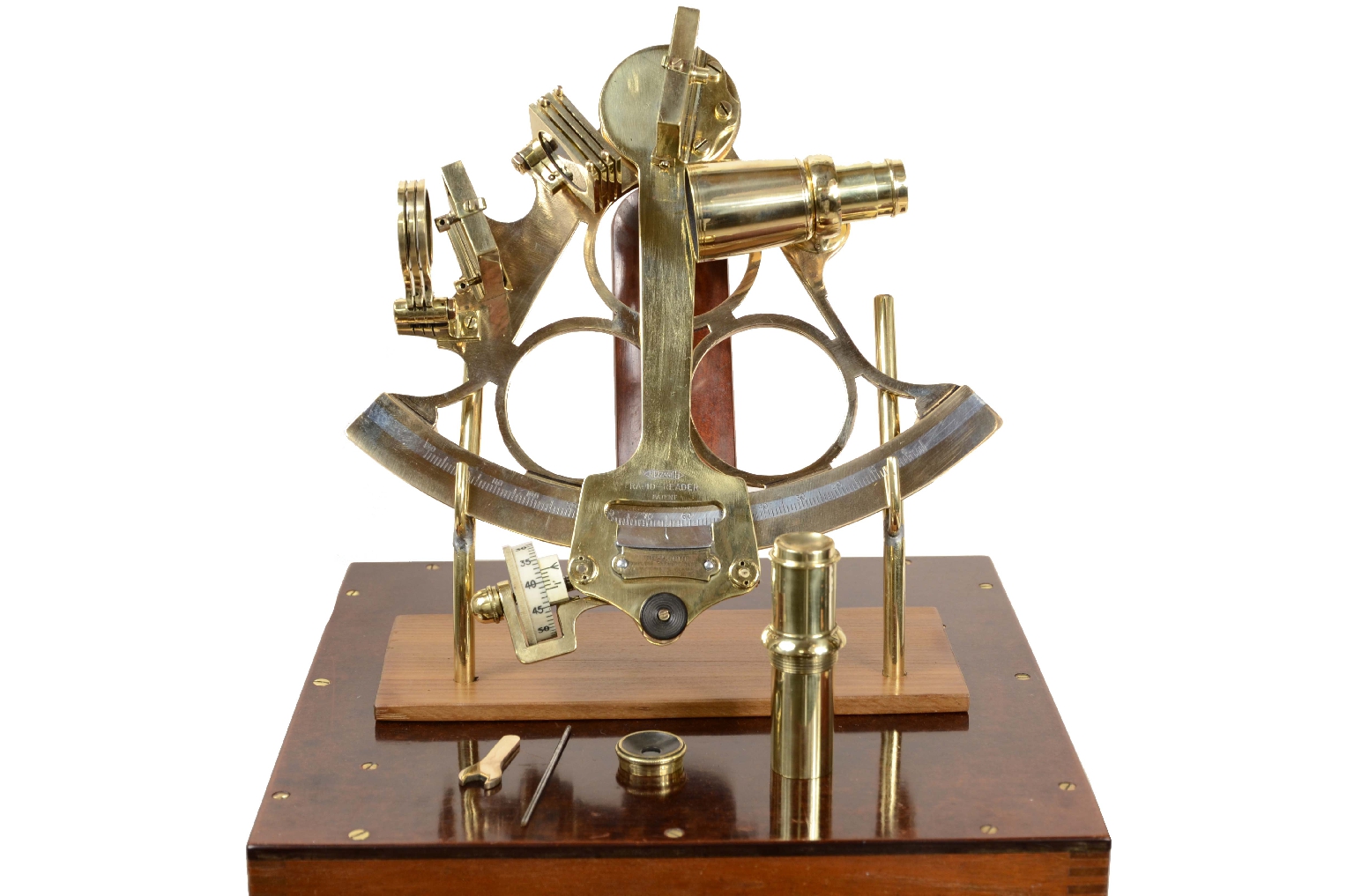
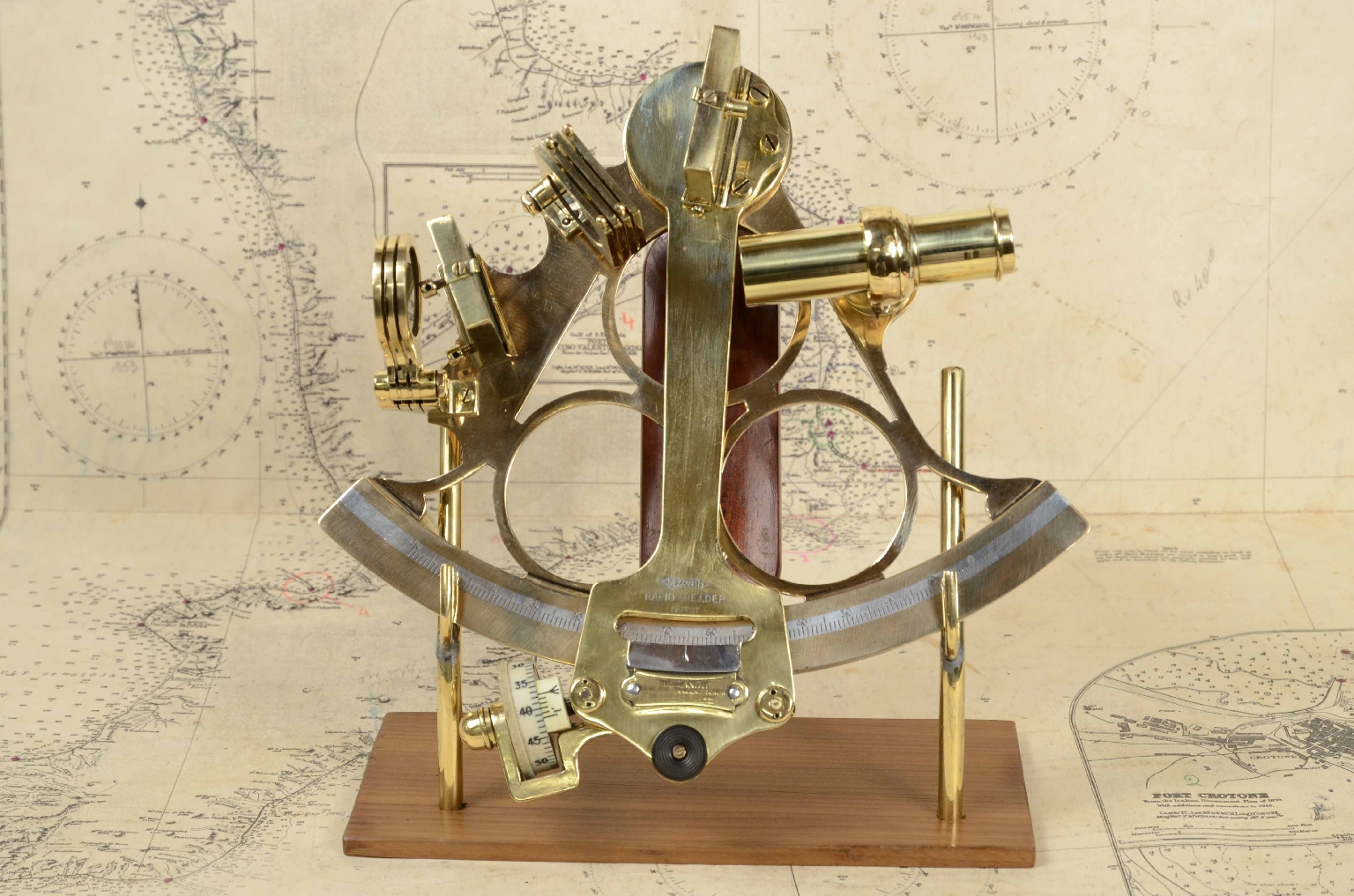
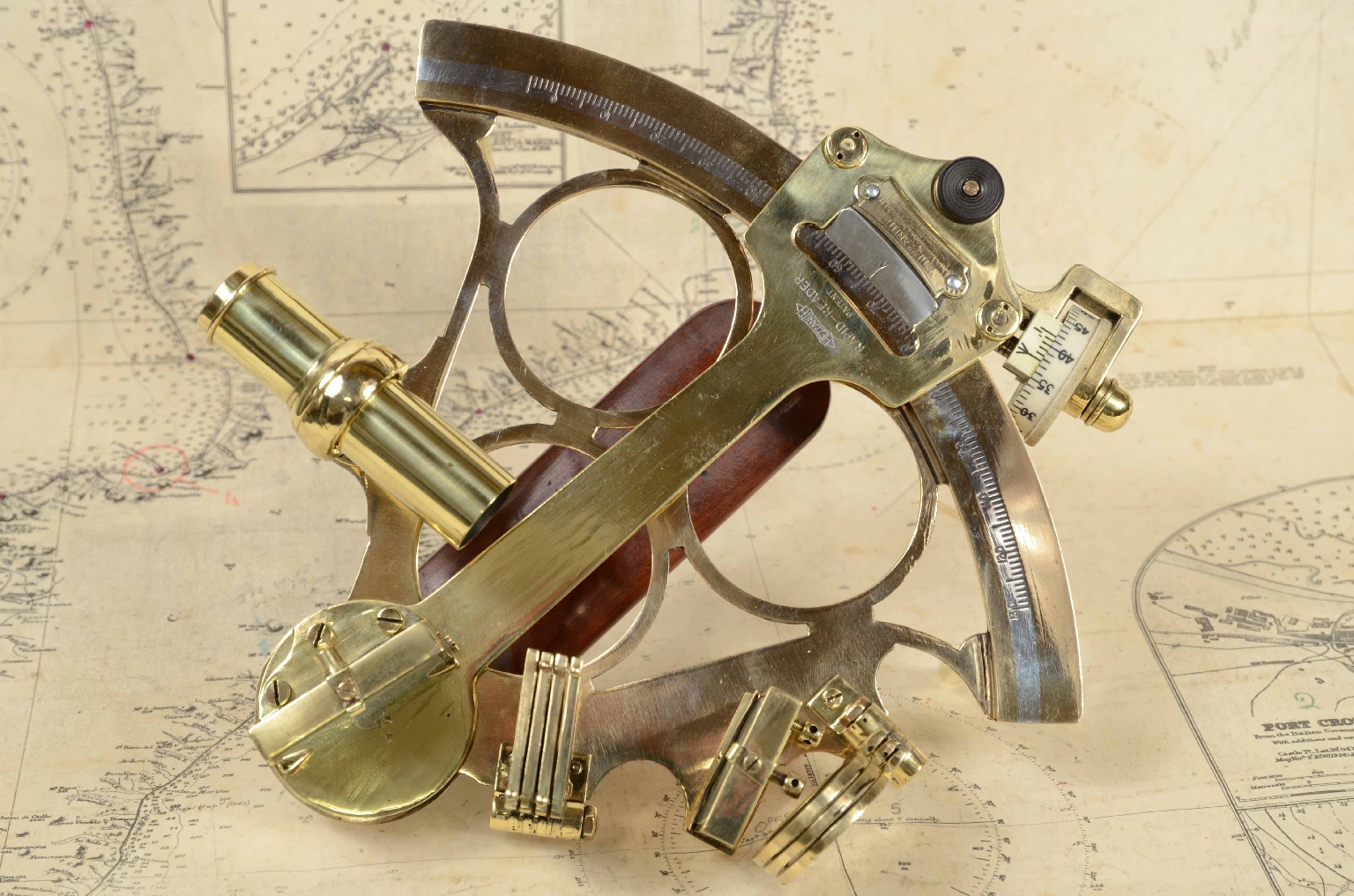
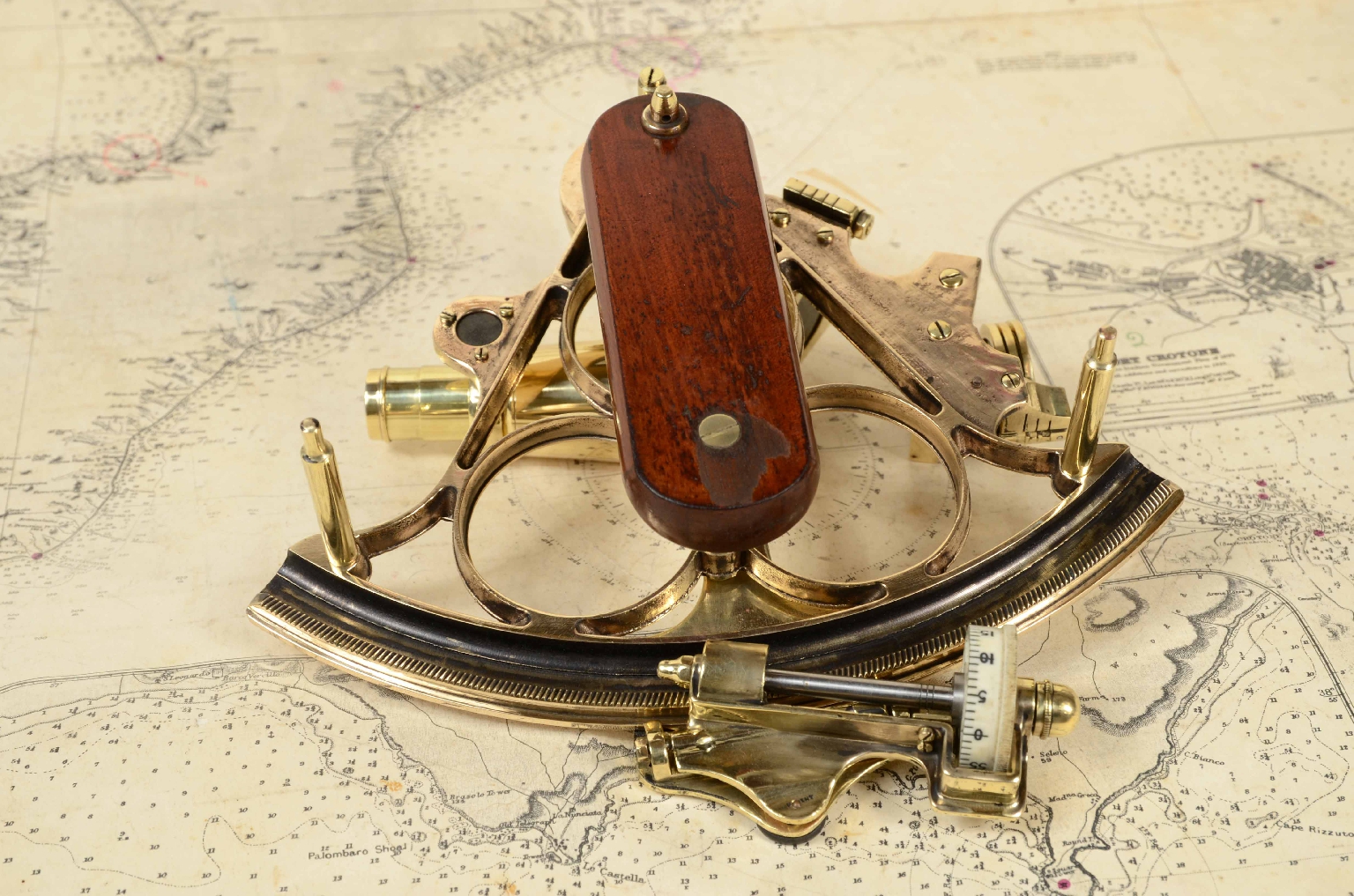
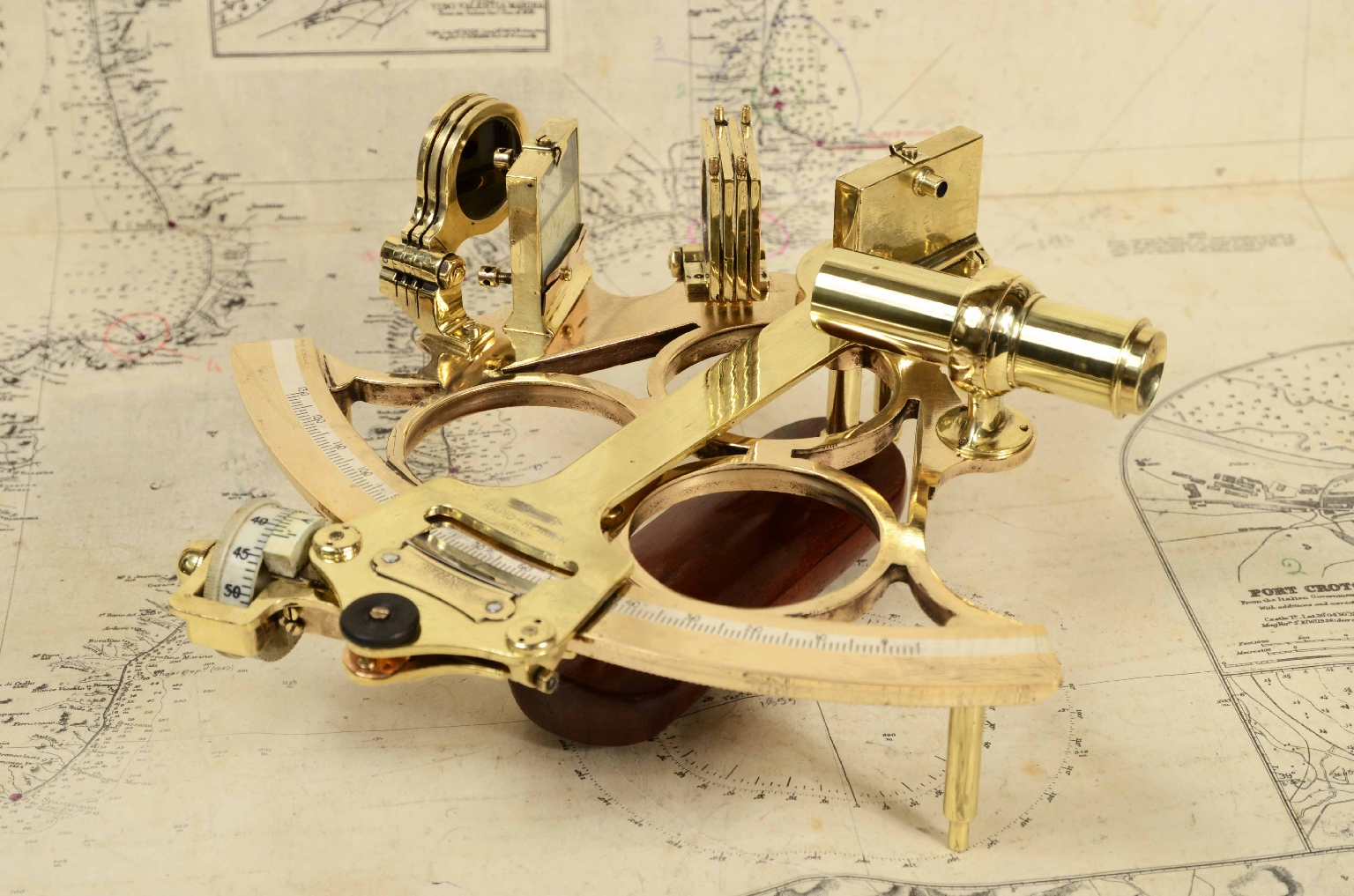
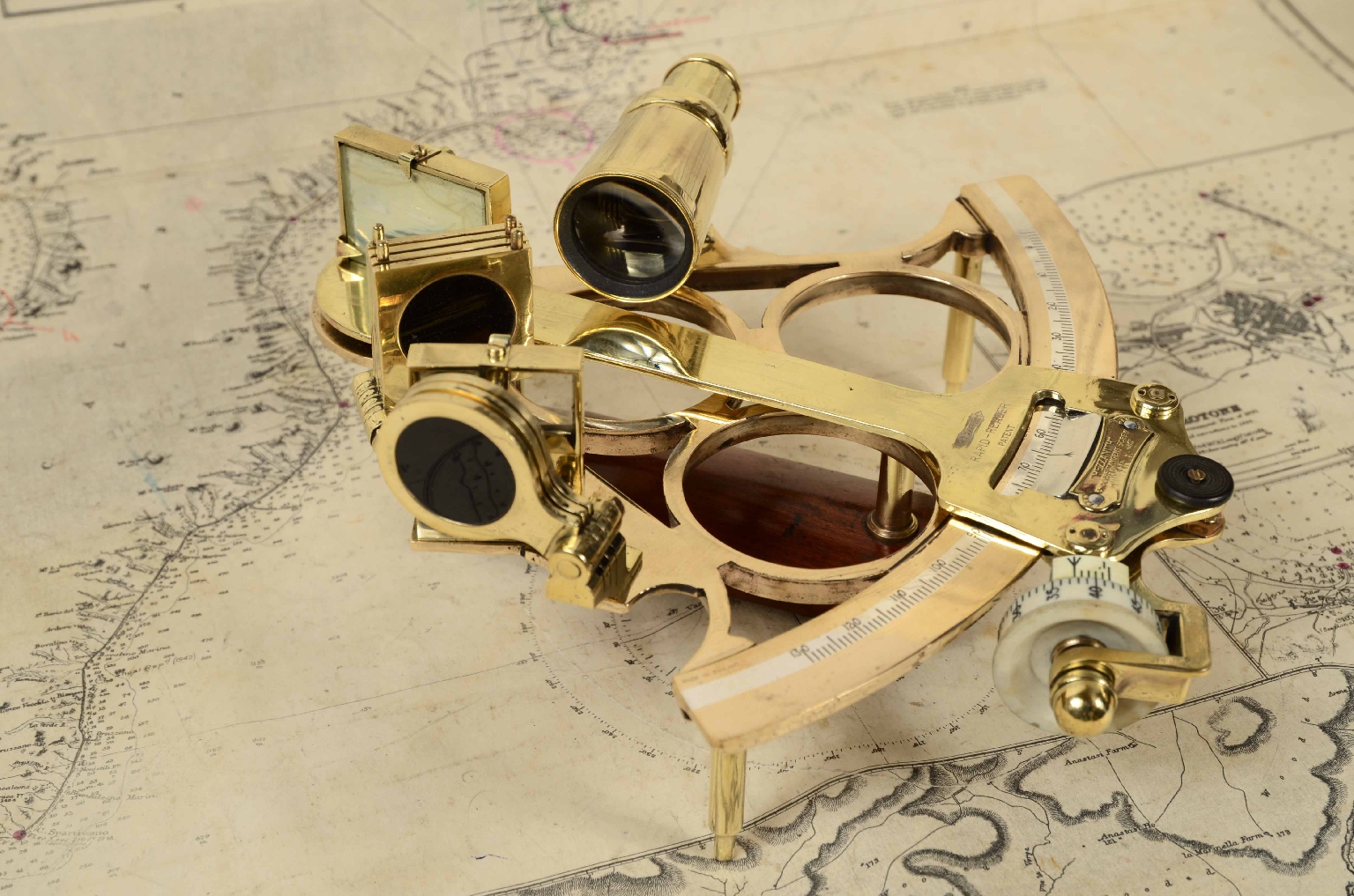
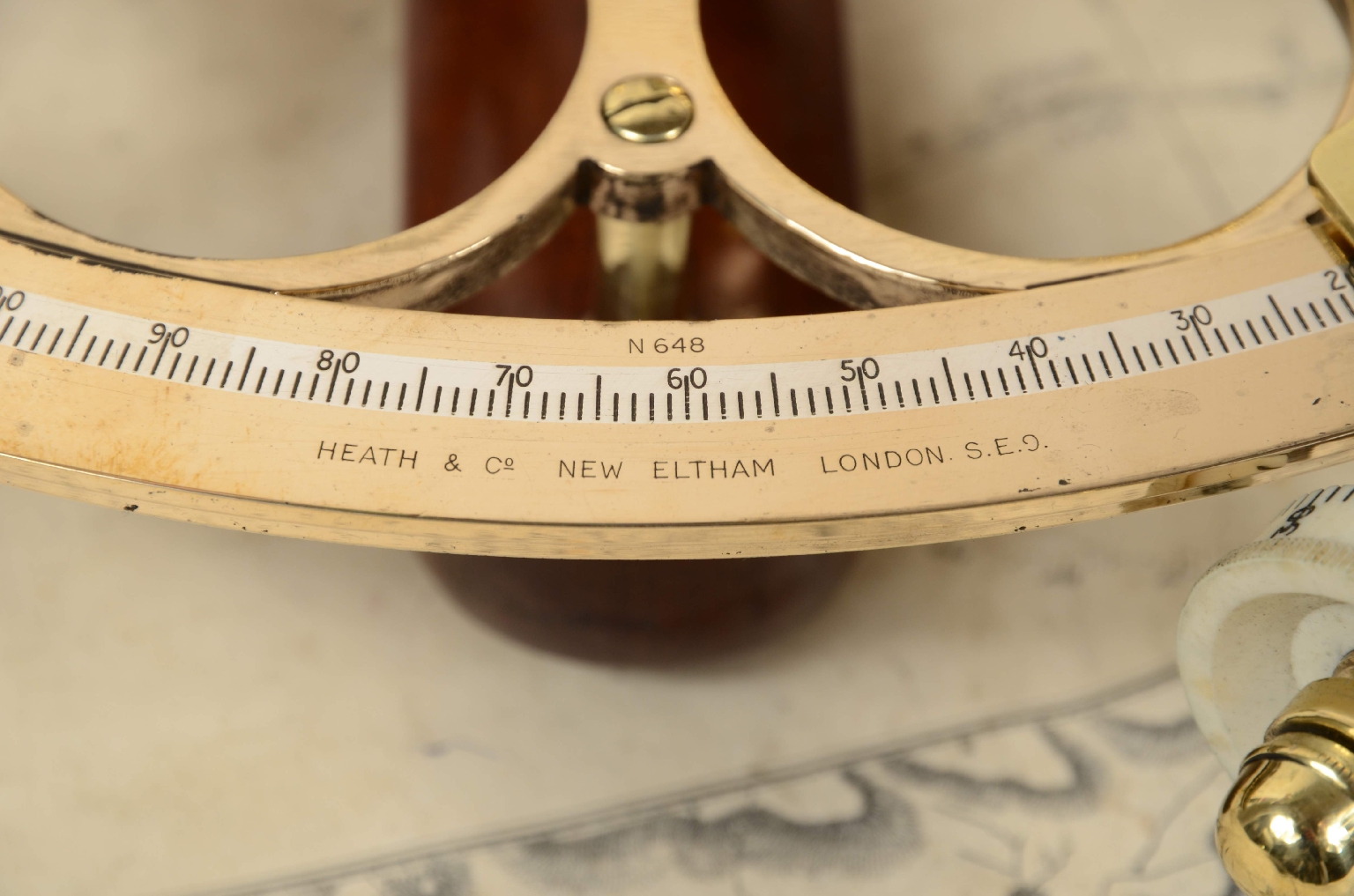
1697300634Code 7620 Antique SextantBrass sextant signed HEATH & C Ltd New Heltham London, a manufacturer of scientific instruments founded in 1845 and active until 1937.
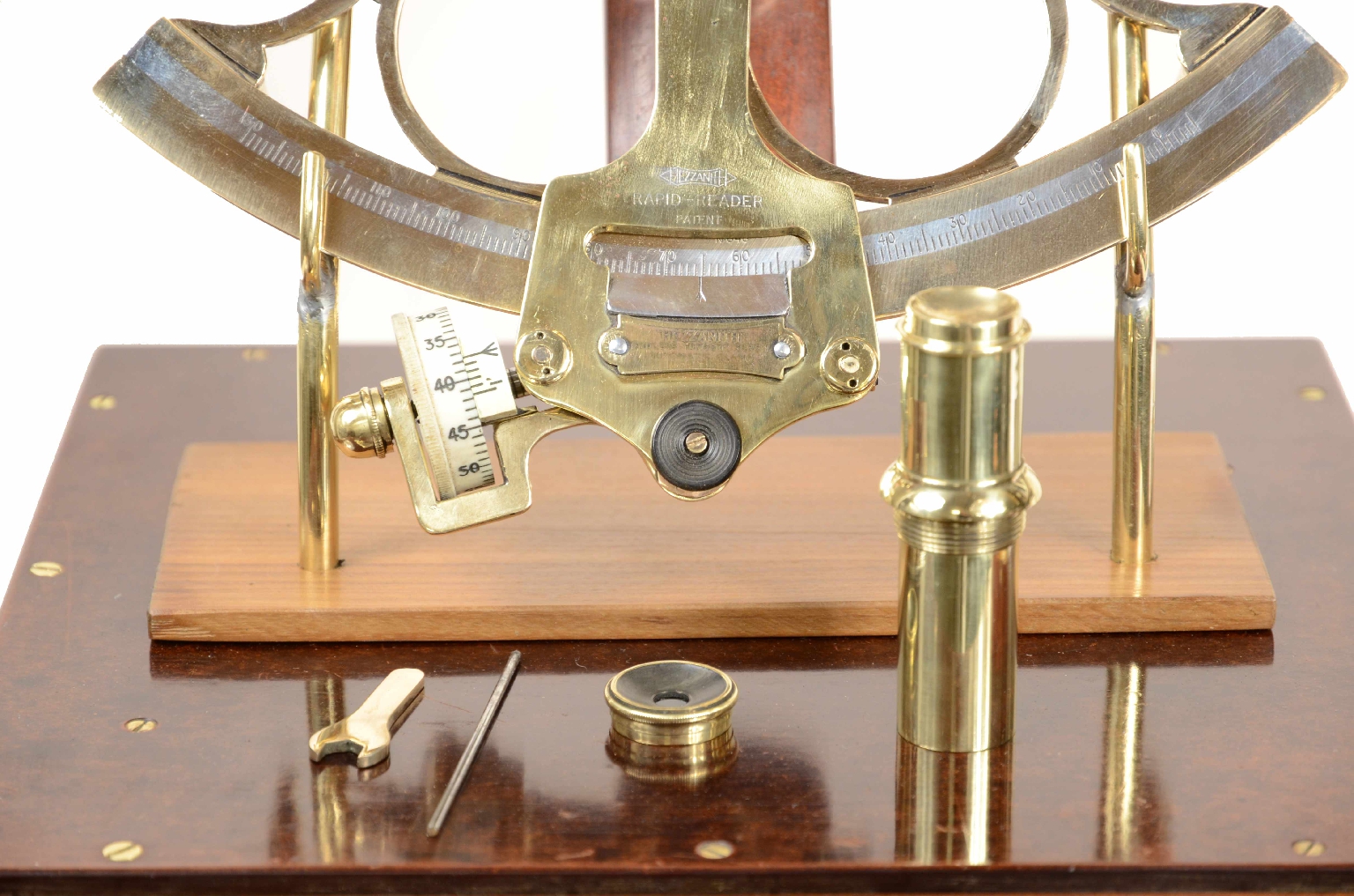
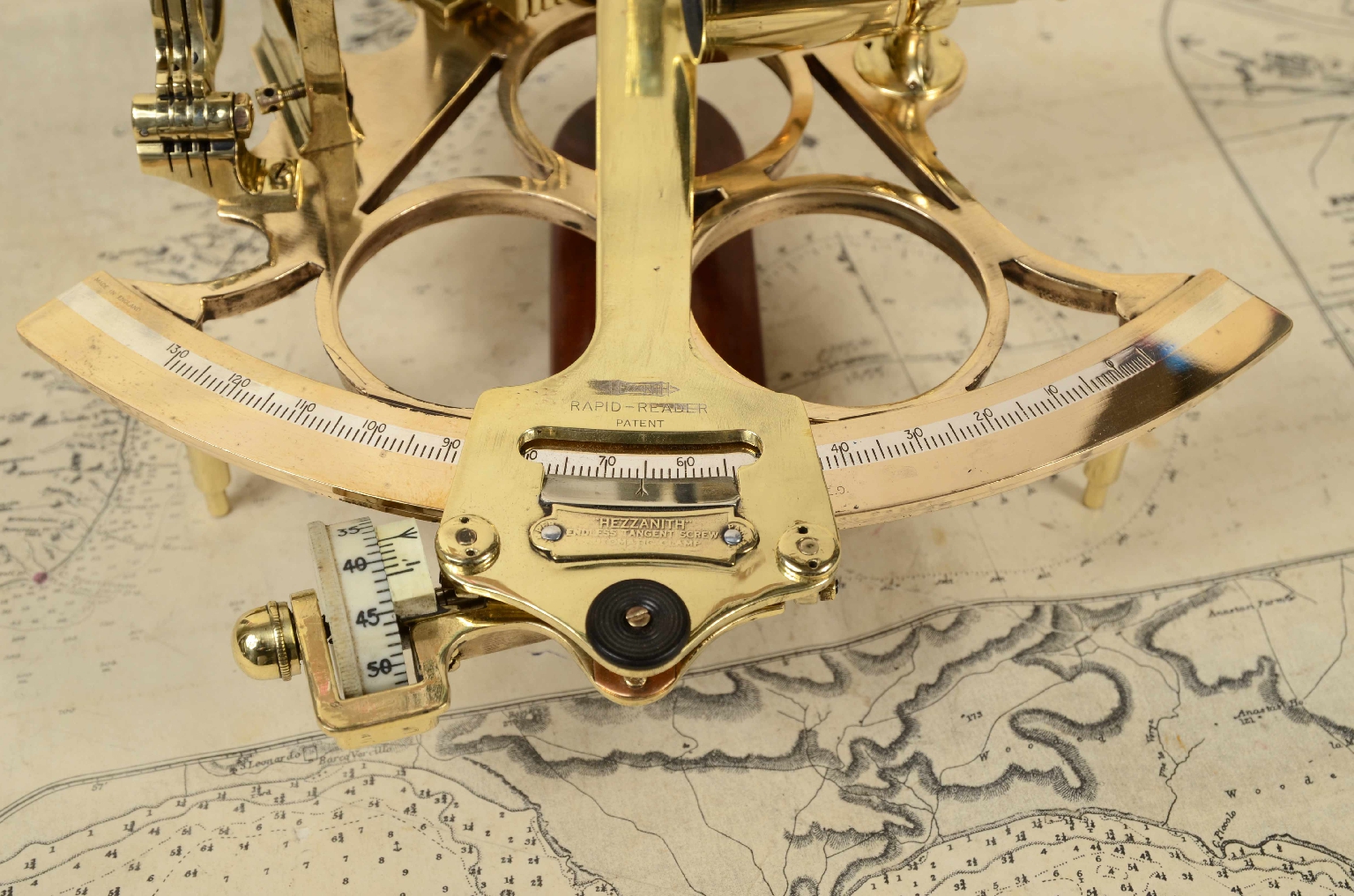
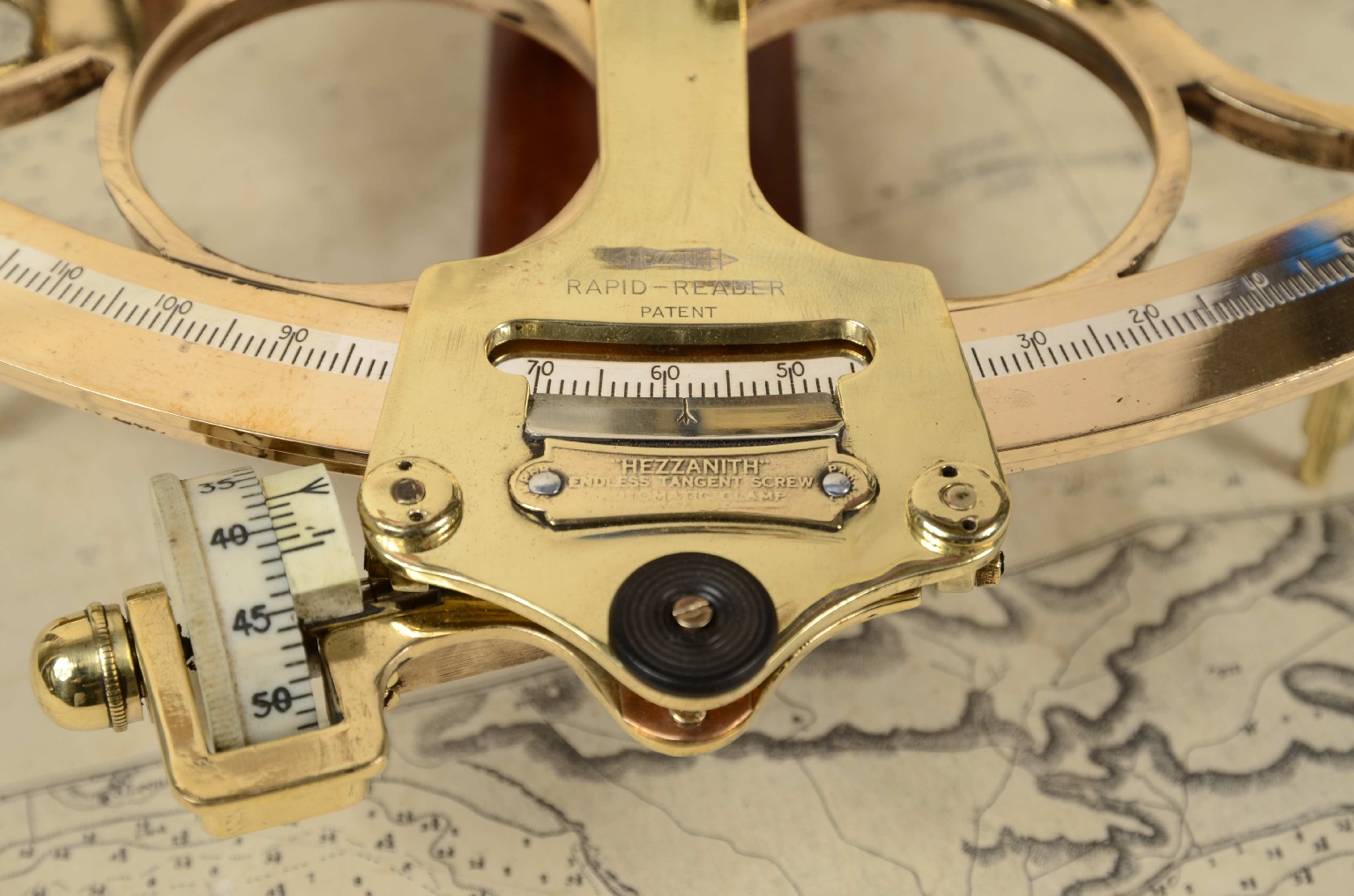
HEZZANITH Endless Rapid Reader Automatic Clamp Patent model from the early 1900s.
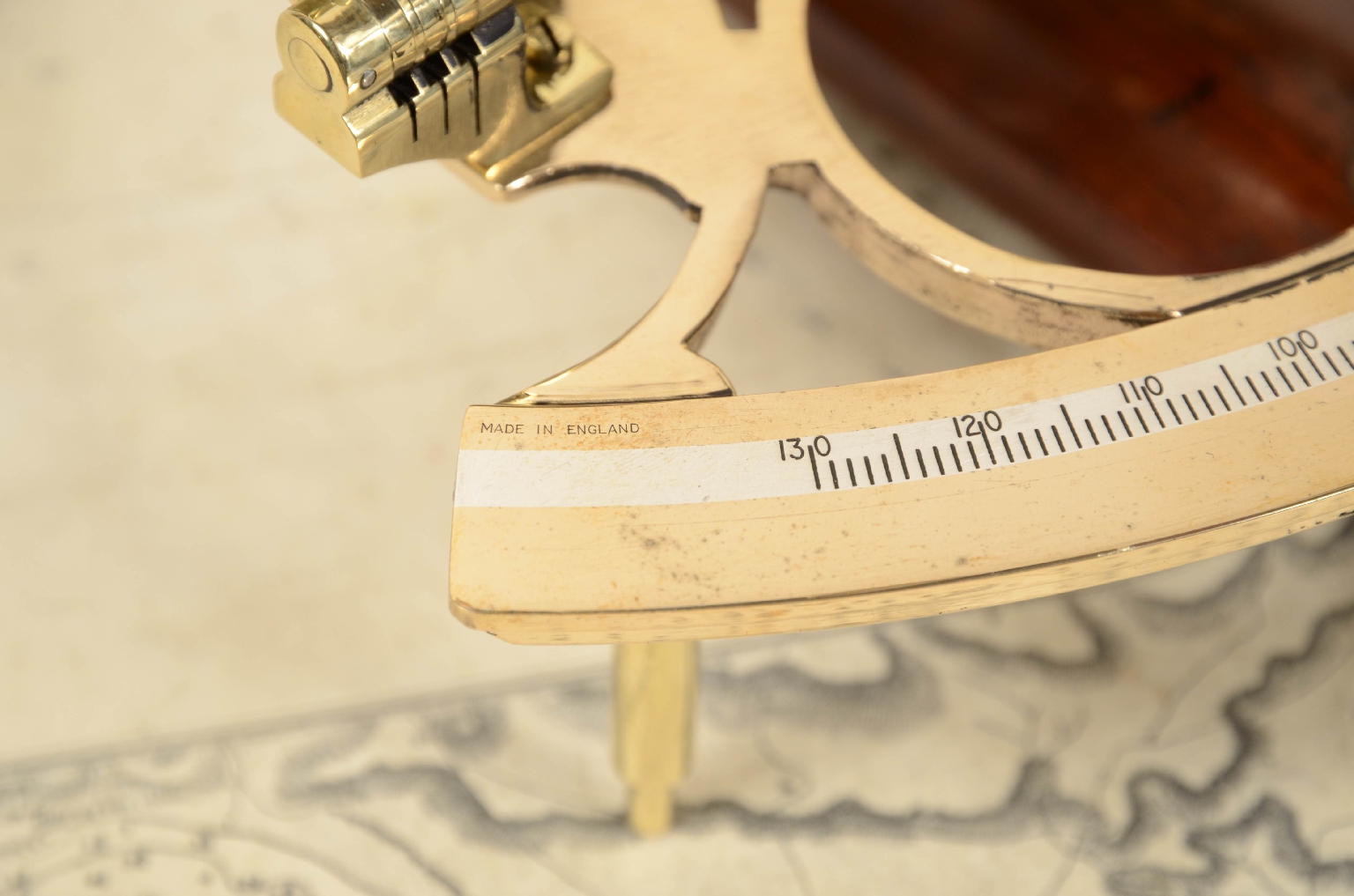
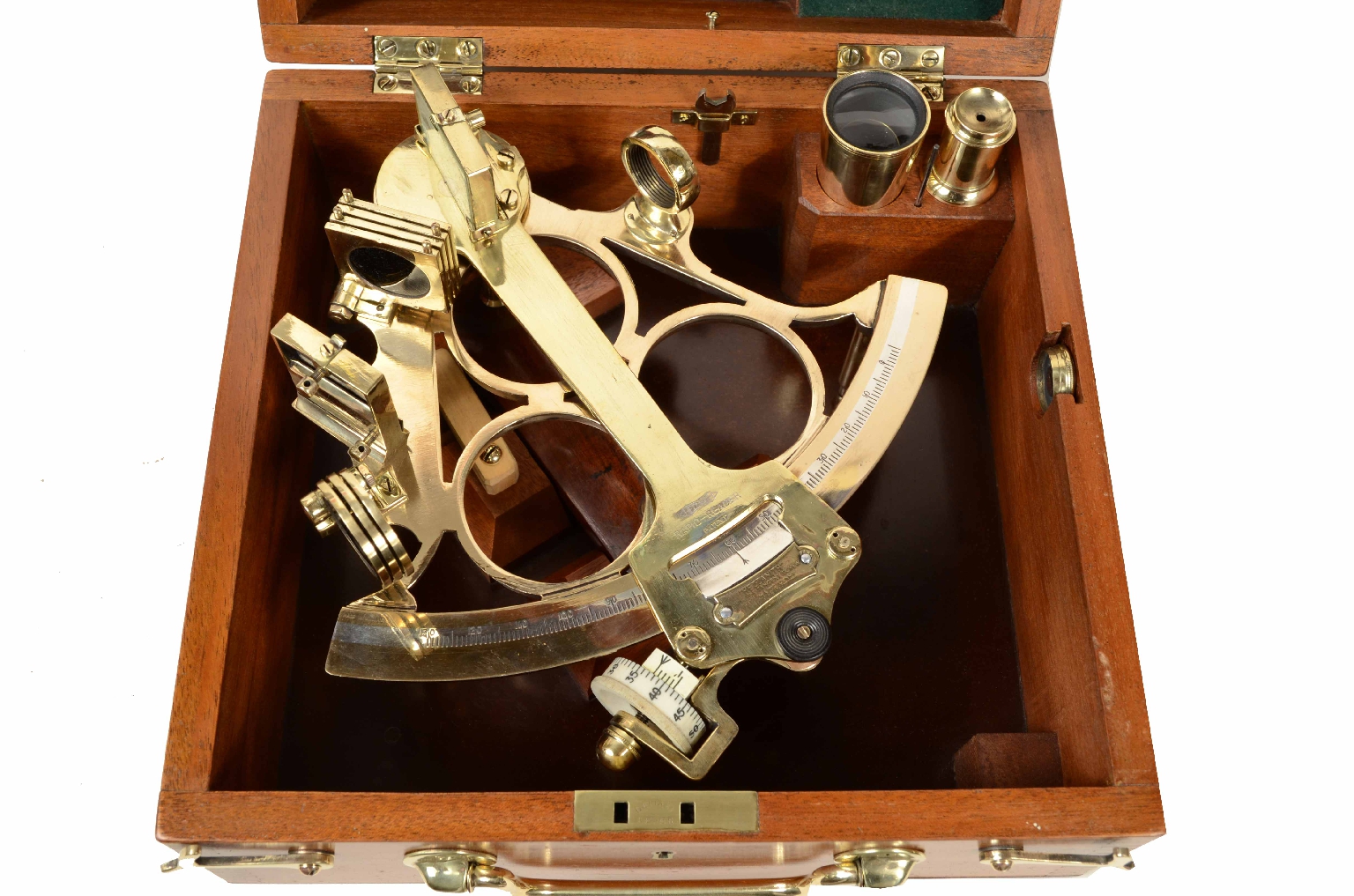
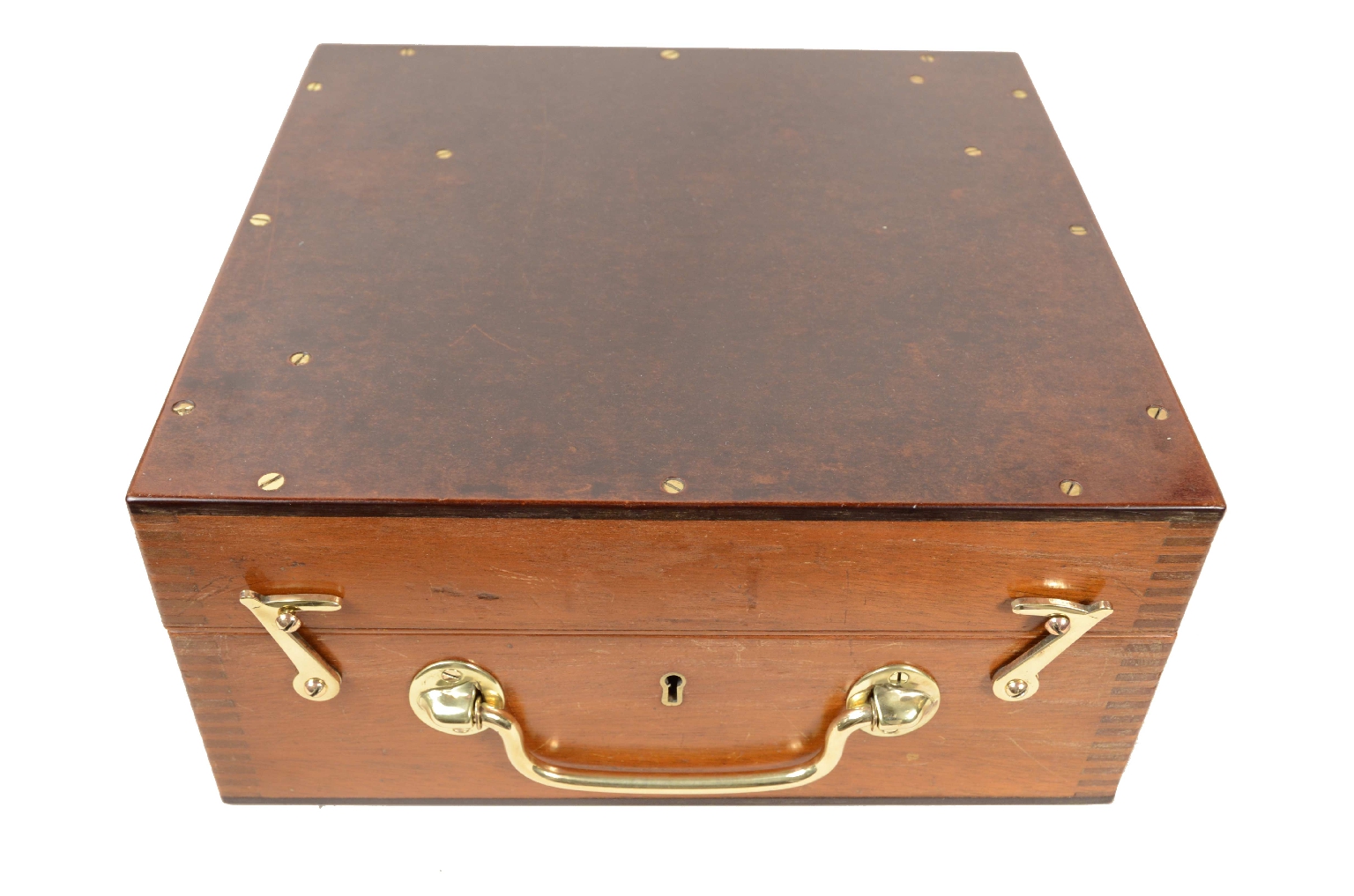
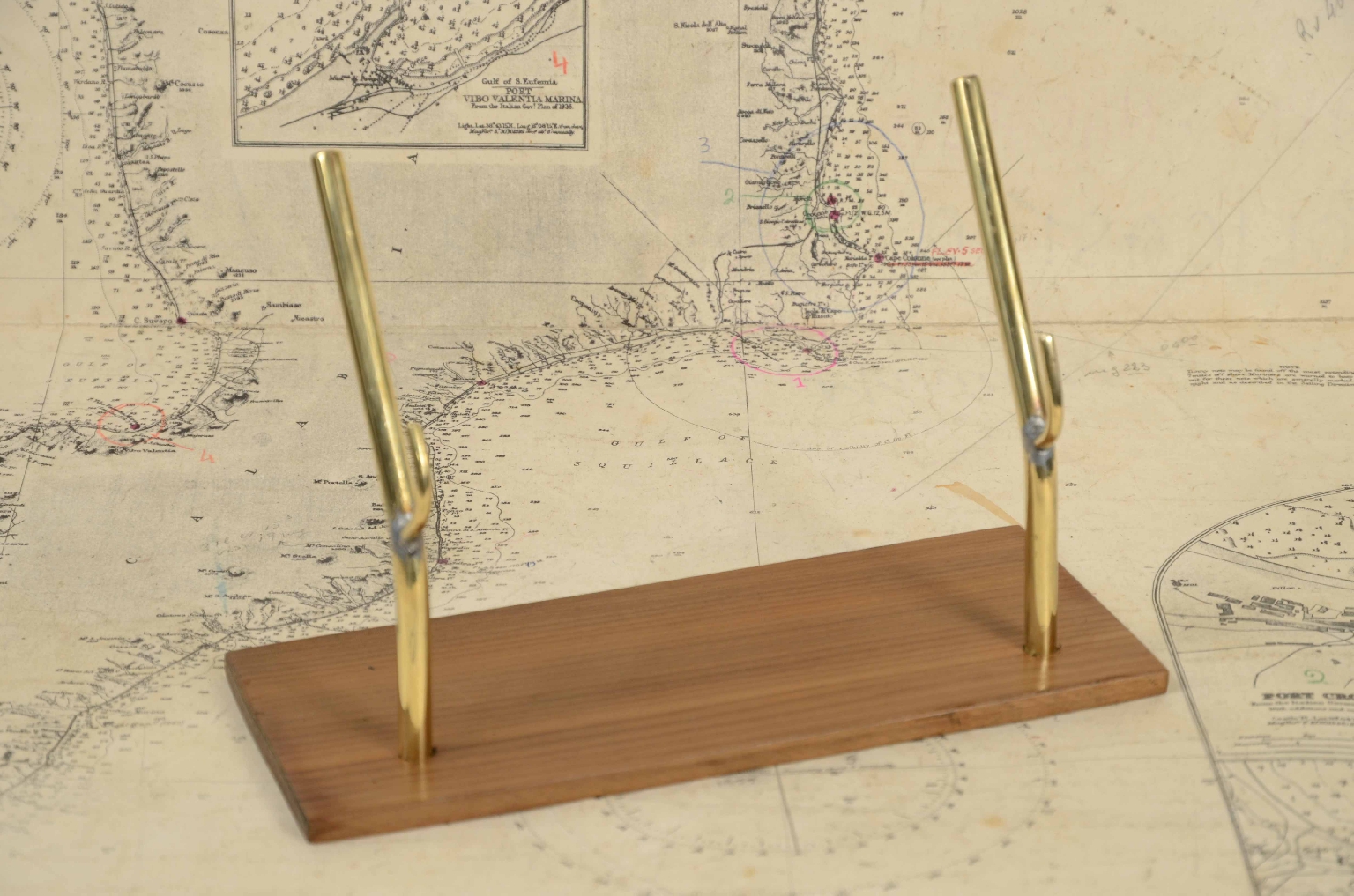
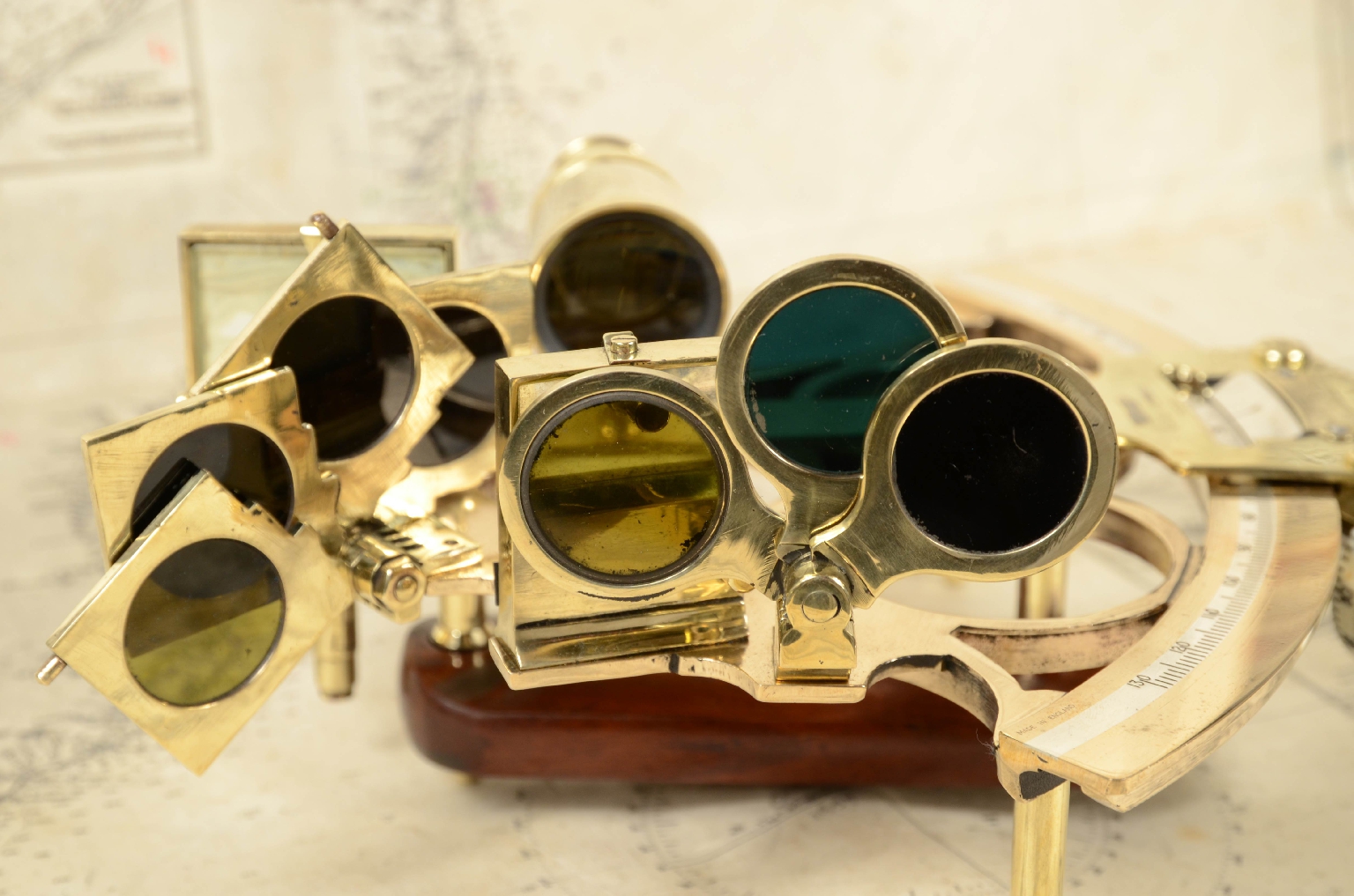
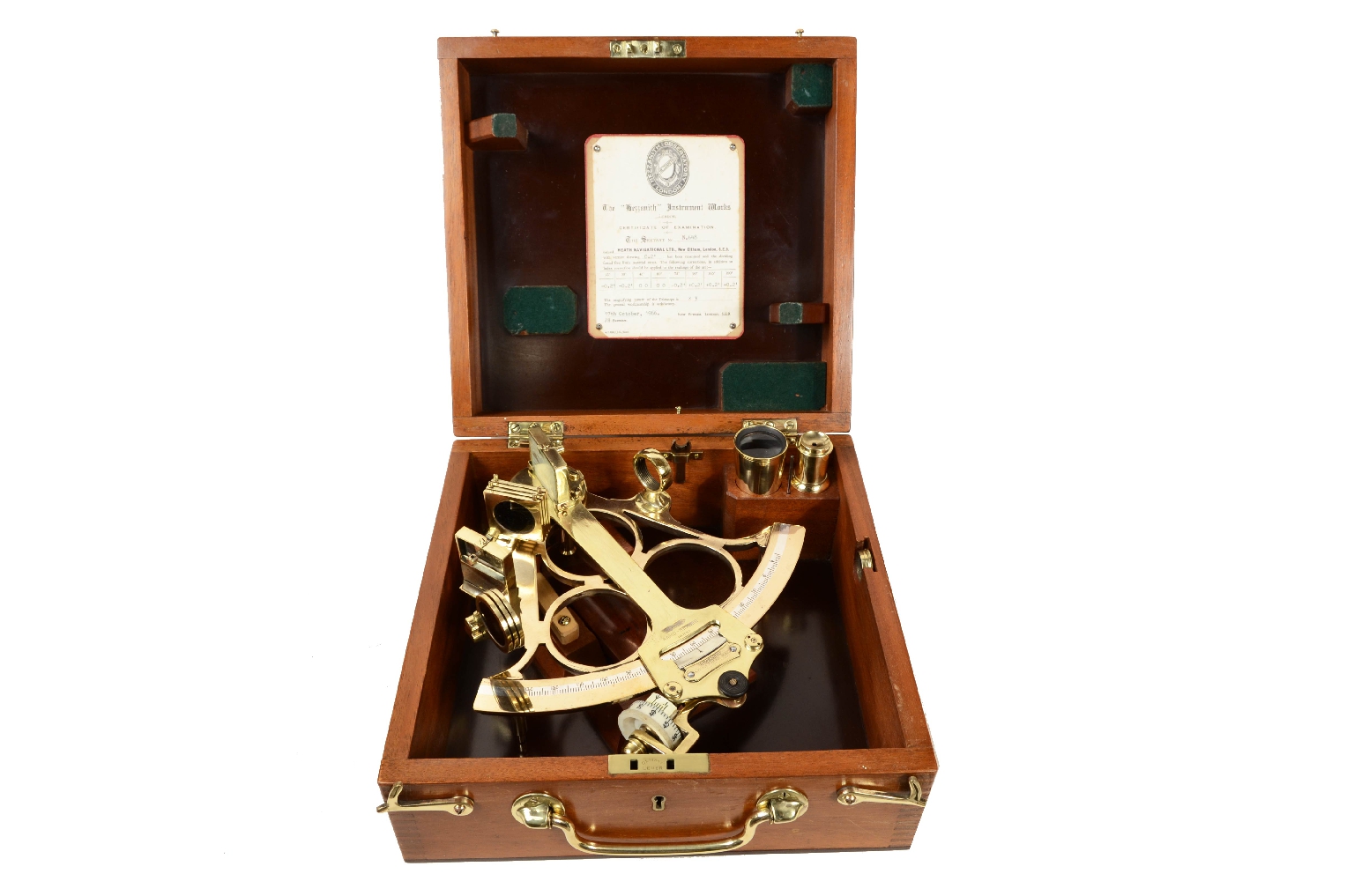
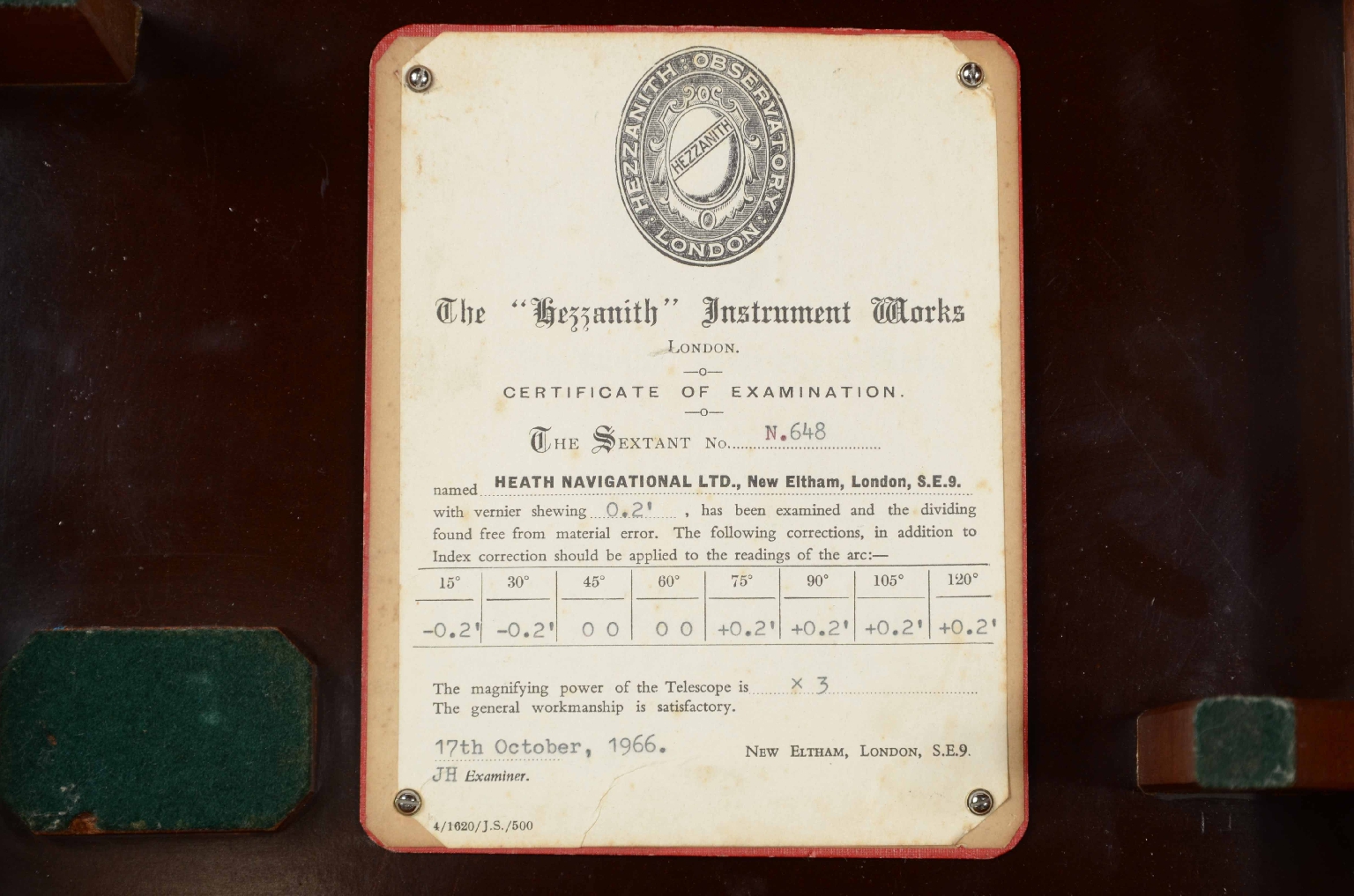
The instrument is complete with optics and housed in its beautiful original mahogany wood box complete with hinges, locking hooks and brass handle. Silver flap and vernier, wooden handle, 3 colored glasses for the fixed mirror and 4 for the mobile one, two telescopes, 1 filter, recording key, vernier graduated from 0 to 130°, index and horizon mirror . A label placed inside the lid informs that the instrument was serviced on 17 October 1966. Box measures 28x26.5 cm, h 14 – 11x10.4x5.5 inches. Conservation status: very good, fully functional, complete with custom-made support base made of wood and brass.
The sextant is an ancient astronomical instrument used for measuring the height of a star (for example the Sun): the instrument is placed in a vertical plane and, looking through the aiming device, the horizon line visible through the non-silvered half of the fixed mirror. By moving the alidade, with which the mirror is integral, the light rays coming from the celestial body and subsequently reflected by the mobile mirror and by the silvered half of the fixed mirror are sent back by the latter in the direction of observation: if if you look through the aiming device you see the image of the star, obtained by double reflection, coinciding with the horizon line. The height of the star is expressed by the angle whose value is read on the graduated scale. The filter is used when the star to be targeted is the Sun.
It was Sir Isaac Newton who invented the principle of double reflection in navigational instruments, but this research was never published. Subsequently, two men, independently of each other, discovered the sextant around 1730: John Hadley (1682-1744), English mathematician, and Thomas Godfrey, (1704-1749), American inventor. But only in 1758 did Admiral John Campbell carry out a series of tests at sea to test a new method that relied on lunar distance as a means of calculating longitude. This is how the sextant was developed. Initially made of brass, they had scales divided with great precision by mathematicians who made scientific instruments.
FAQ
Do you provide an authenticity certificate/expertise?
Of course! The legislative decree n. 42/2004 stipulates that who sells works of art or historical and archaeological items has the obligation to deliver to the purchaser the documents attesting to the authenticity of the object, or at least to submit the documents relating to the probable attribution and origin. Antik Arte & Scienza provides an expertise (as warranty) that contains a description, period and assignment or the author, if known, of the item.
How can I pay?
Secure payments by PayPal, credit card or bank transfer.
What are the shipping terms and the delivery schedule?
Shipping by DHL or UPS is free (but if we are shipping to a country non-EU remember that any taxes and customs duties are on your expense), and items will be sent just after receiving of payment.
Italy: delivering on the average in 24 h.
Europe: delivering on the average in 2/3 weekdays.
Other countries: delivering on the average in 5 weekdays; custom duties charged to the buyer.
Is shipping insured?
Of course! Free insurance by Lloyd's London that covers almost all destinations.
If I change my mind, can I return the item?
Of course! (see our general terms for more information).
e-Shop
Nautical antiques
Code 7620 Antique Sextant
Antik Arte & Scienza sas di Daniela Giorgi - via S. Giovanni sul Muro 10 20121 Milan (MI) Italy - +39 0286461448 - info@antik.it - www.antik.it - Monday-Saturday: 10am-7pm